Service
Termite Control
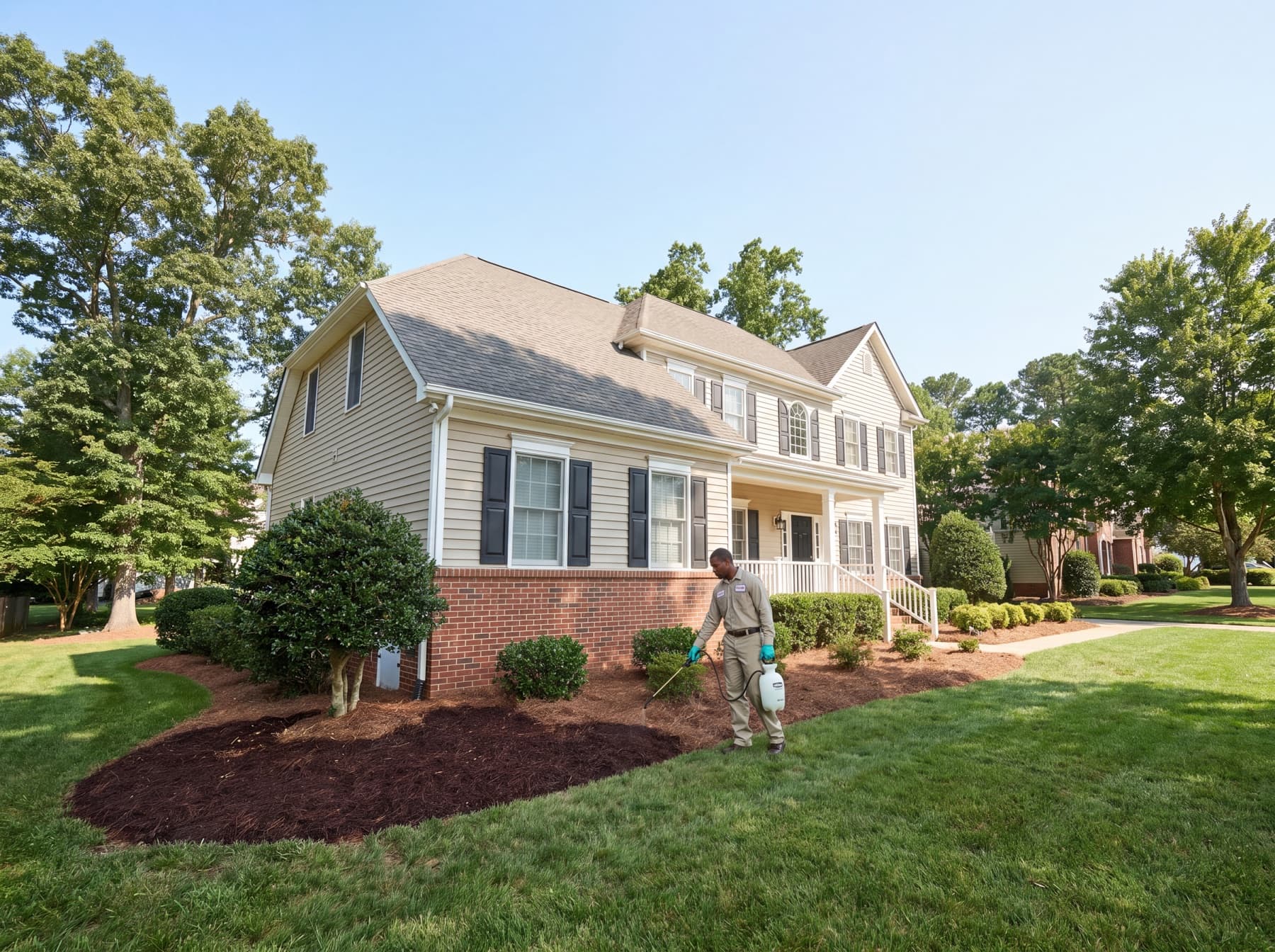
Termite inspection and treatment for Charlotte's mix of older homes and new-construction builds, including liquid soil treatments, bait station systems, and pre-treatment for additions or renovations. We look for the specific signs — mud tubes, hollow-sounding wood, discarded wings — before recommending any treatment.
Termites cause more structural damage to North Carolina homes every year than fire and storms combined, and Charlotte's mix of century-old construction near Uptown and Dilworth alongside newer builds further out means the risk doesn't discriminate by neighborhood or home age. The tricky part is that termites work quietly behind walls and under slabs for months before the damage becomes visible, so knowing what to look for — and what actually gets rid of them — matters more than most homeowners realize until it's their house.
Signs of Termites in Your House
The most reliable sign is mud tubes — pencil-thin dirt tunnels running up your foundation, crawlspace piers, or exterior walls. Subterranean termites build these to travel between the soil and their food source while staying protected from open air, and finding one is close to a confirmed diagnosis, not just a warning sign.
Other signs to check for:
- Frass — tiny, wood-colored pellets that look like sawdust or coffee grounds, usually piled near baseboards or window sills. This is the telltale sign of drywood termites, which don't need soil contact the way subterranean termites do.
- Discarded wings — small, uniform wings shed near windowsills, doors, or other entry points after a swarm. Termite swarmers twist off their wings once they've landed to start a new colony, so a pile of wings is often the first visible sign homeowners notice.
- Hollow-sounding wood — tap on exposed wood trim, deck framing, or structural beams. Wood that sounds hollow or papery instead of solid has likely been hollowed out from the inside.
- Doors and windows that suddenly stick, or floors that feel slightly warped — termite damage to structural wood can cause subtle shifting that shows up as sticking doors before any visible damage appears.
Brick homes, common throughout Charlotte's older neighborhoods, aren't immune — brick veneer sits on a wood-framed structure underneath, and mud tubes can travel up through weep holes or foundation cracks completely out of sight until an inspection catches them.
How to Get Rid of Termites: DIY vs. Professional Treatment
Store-bought termite sprays and stakes can work for a very small, localized drywood infestation caught early — a single piece of furniture, for instance. For anything involving subterranean termites, a larger colony, or activity inside the structure itself, DIY products fall short for one structural reason: they only treat what's visible on the surface. They can't reach a colony living in the soil under your slab or deep inside a wall cavity, so a treated area can look clear for a few weeks while the colony keeps feeding somewhere else in the house.
Professional treatment works differently depending on the termite type and the extent of the problem:
- Liquid soil treatments create a continuous chemical barrier around the entire foundation footprint — professionals apply 100 to 300 gallons of termiticide at a precise rate, using equipment and licensed-applicator access that isn't available over the counter. This is the standard approach for subterranean termites, the species responsible for the vast majority of termite damage in North Carolina.
- Bait station systems (Sentricon, Trelona) place monitored stations around the property that termites feed on and carry back to the colony, eliminating it at the source over time rather than repelling termites away from the structure.
- Fumigation (tenting) is reserved for severe, widespread drywood infestations — the entire home is sealed and treated, which is a bigger undertaking but addresses activity throughout the whole structure at once, not just one accessible area.
Key takeaway
A failed DIY attempt doesn't just waste the cost of the product — it buys the colony more time to cause damage that can run into tens of thousands of dollars in repairs. Professional treatment costs more upfront but protects a home for 5 to 10 years, which is the real comparison that matters.
How Much Does Termite Treatment Cost?
Termite treatment in Charlotte generally runs $225 to $2,500, with the method driving most of the difference:
| Treatment method | Typical cost |
|---|---|
| Liquid soil treatment | $500 – $1,500 ($3–$16 per linear foot) |
| Bait station system | $800 – $1,500 install + $200–$400/yr monitoring |
| Whole-home fumigation (drywood) | $2,000 – $8,000 |
Liquid treatments tend to be cheaper over a 5-year window (roughly $1,200–$1,500 total) than bait systems with ongoing monitoring ($2,500–$4,000 over the same period), but bait systems avoid drilling and trenching around the foundation, which matters more for some homes than others depending on landscaping and hardscaping around the house.
How Long Does Termite Treatment Take?
The treatment visit itself, including the inspection, usually takes less than a day for a typical home. How quickly the termites are actually eliminated depends on the method: liquid treatments start killing termites within days of contact, with full effectiveness across the colony within a few weeks. Bait stations work more gradually — 15 to 90 days is typical, with full colony elimination sometimes taking up to 6 months, since the process relies on termites carrying the bait back to the nest themselves. Fumigation is the fastest for eliminating active drywood activity but requires the home to be evacuated for 24 to 72 hours during the process.
Termite Pre-Treatment for New Construction and Additions
Pre-treating the soil before a slab is poured is standard practice on new construction, and the same principle applies to additions on existing Charlotte homes — a new room, garage conversion, or slab extension is a fresh opportunity for subterranean termites to establish a path into the structure if the soil underneath isn't treated first. It's far cheaper and less invasive to apply a liquid barrier to open soil before framing goes up than to treat around a finished slab later, which usually means drilling through concrete to reach the soil underneath.
If you're planning an addition, it's worth asking your contractor whether termite pre-treatment is included in the scope of work or needs to be scheduled separately with a licensed pest control company — this is easy to overlook during a renovation, and missing the window before the slab is poured means treating it the harder, more expensive way later.
Where We Offer Termite Control
What Homeowners Look For
A few things customers consistently tell us matter most.
Frequently Asked Questions
Ready to get this fixed?
Call now or request a free estimate — we'll get back to you fast.